
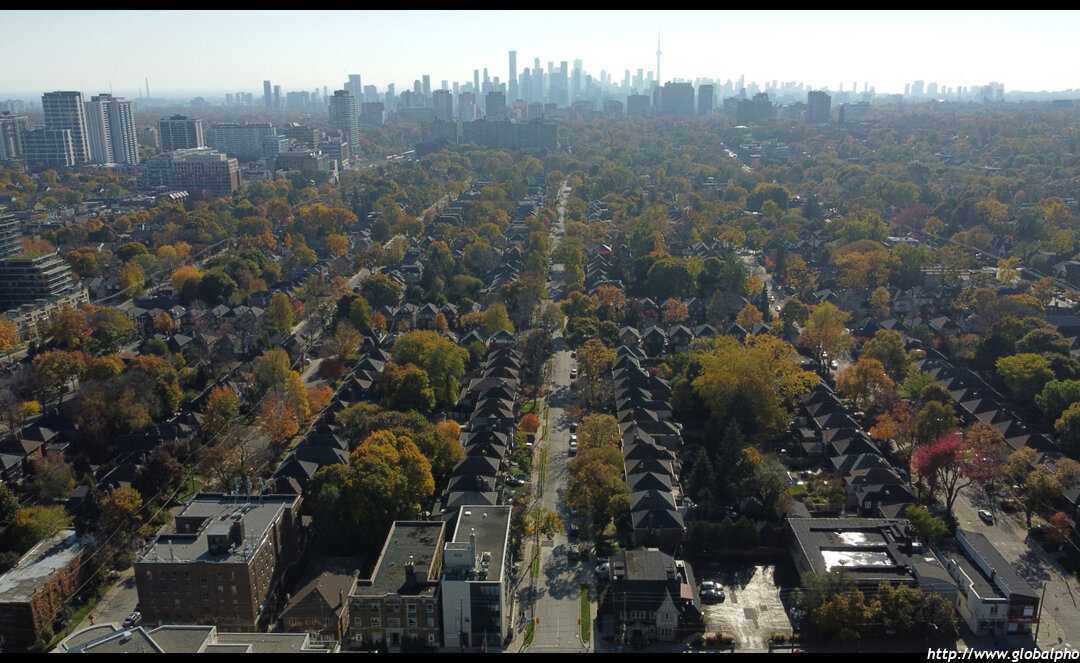
Where gardens can have the greatest impact on biodiversity and ecological services
Gardens can contribute to biodiversity and ecological services — but their impact depends far less on plant choice alone than on context, scale, and connectivity. Understanding where gardens have the greatest leverage helps keep expectations realistic and aligns effort with outcomes that genuinely matter. (1)
By Dorothy and Patrick Smyth
1. The strongest gains occur where gardens increase total green area
The most important ecological threshold gardens can influence is area. Biodiversity and ecological services increase most where gardening reduces hard surfaces and lawn dominance, replacing them with structurally complex vegetation.
This effect is strongest where:
- gardens are relatively large
- lawn area is extensive
- planting choices reduce mowing, disturbance, and chemical inputs
In these settings, gardens don’t just change what is planted — they change how much living space exists at all. (2)
2. Neighbourhood-scale coordination matters more than individual effort
Gardens have their greatest ecological impact when they align across property lines. Connectivity — even loose, imperfect connectivity — amplifies value far more than isolated excellence.
This happens when:
- multiple gardens reduce lawns simultaneously
- canopy and understory begin to overlap across streets
- planting supports continuous bloom, cover, and shelter
At this scale, the unit of change shifts from one garden to one neighbourhood. That shift — not plant origin by itself — is where ecological effects begin to compound. (3)
3. Structural complexity outweighs plant origin
Across urban and suburban contexts, biodiversity responds most strongly to:
- layered vegetation (trees, shrubs, groundcover)
- season-long floral resources
- undisturbed soils and leaf litter
- reduced pruning and cleanup
Native plants can contribute to these conditions, but nativeness alone does not guarantee them. Conversely, many non-native plants can support ecological services when they add structure, duration, and stability.
Gardens do the most ecological work when they:
- increase vertical and horizontal complexity
- reduce disturbance cycles
- allow ecological processes to persist (4)
4. Gardens matter most at the edges and transitions
Gardens are especially valuable where they sit adjacent to:
- ravines and waterways
- rail or hydro corridors
- large parks and institutional lands
- suburban edges bordering natural or semi-natural areas
In these locations, gardens can:
- buffer existing habitats
- reduce edge effects
- soften transitions between built and natural spaces
Here, even modest changes can support larger systems — because the surrounding landscape already carries ecological weight. (5)
5. Cultural and social effects are real — and important
One of the most consistent contributions of gardening is normalization. Gardens help people see cities and settled landscapes as ecological places, not just decorative ones.
This matters because:
- norms influence planning decisions
- expectations shape design standards
- public support enables land-use change
In this way, gardens contribute indirectly by helping ecological values become visible, shared, and politically durable. (6)
Where gardens matter less — and why that clarity helps
Gardens have limited ability to:
- offset habitat loss from development
- reverse fragmentation at city or regional scale
- deliver major biodiversity gains in isolation
In dense urban cores, ecological outcomes are governed mainly by land use, infrastructure, and green-space connectivity. In rural landscapes, they are shaped primarily by agriculture, forestry, wetlands, and water management. In both cases, gardens are supportive — not decisive.
Recognizing these limits does not diminish gardening. It protects it from over-claiming and from being burdened with responsibilities it cannot realistically carry. (7)
The bottom line
Gardens have the greatest impact on biodiversity and ecological services when they;
- increase total vegetated area
- reduce disturbance and lawn dominance
- align across neighbourhoods
- add structural complexity
- support larger landscape systems nearby
Their power lies not in being the primary solution, but in reinforcing the conditions under which larger-scale ecological decisions can succeed.
Being clear about this strengthens gardening as a practice — grounded, generous, and honest about where change actually happens.
Conclusion
Taken together, this suggests that the greatest potential for gardens to influence biodiversity and ecological services lies not in dense urban cores or rural landscapes, but in suburban areas — where total green area is large, lawns dominate, and neighbourhood-scale coordination is possible. This is not because any individual suburban garden is inherently more important, but because suburban form allows small changes to accumulate into meaningful patterns when they align across properties. Urban gardens remain valuable for learning, normalization, and local improvement; rural biodiversity depends primarily on land management beyond the garden fence. Being explicit about these different roles keeps expectations proportionate, affirms gardeners in all settings, and helps direct effort toward where it can do the most ecological work.
(1) – Goddard, Dougill & Benton (2010) – Scaling up from gardens: biodiversity conservation in urban environments
• DOI + journal page: https://doi.org/10.1016/j.tree.2009.07.016
• Preview/abstract source: Scaling up from gardens: biodiversity conservation in urban environments (Trends in Ecology & Evolution, 2010)
Summary: Gardens form interconnected networks across cities and can contribute to biodiversity, but the scale of change matters from individual to neighbourhood scales.
(2) – Seitz et al. (2022) – Urban gardens as hotspots for plant diversity
• Full article (Springer): Urban gardens as hotspots for plant diversity in cities (Urban Ecosystems, 2022)
Summary: Both wild and cultivated plants are abundant in urban gardens, and plant diversity is influenced by local conditions like impervious surface at the garden scale.
(3) – Egerer et al. (2020) – Socio-ecological connectivity differs in magnitude and direction across urban landscapes
• Open access version: Socio-ecological connectivity differs in magnitude and direction across urban landscapes (Scientific Reports)
Summary: Community gardens in cities connect through biological and social mechanisms, and how these connections are arranged affects ecosystem service flows.
(4) – Threlfall, C. G., et al. (2017).
“Increasing biodiversity in urban green spaces through simple vegetation structure changes.”
Journal of Applied Ecology
https://besjournals.onlinelibrary.wiley.com/doi/10.1111/1365-2664.12876N
The study showed that while native vegetation can contribute positively, structural features of the plant community — such as layering, cover, and overall complexity — were stronger and more consistent predictors of animal use than plant origin alone.
(5) – Haaland & Lehtilä (2026) – Biodiversity assessment of urban green spaces for multifunctional green space planning in high-rise residential housing areas – Urban Ecosystems
Link (Springer open access): https://link.springer.com/article/10.1007/s11252-025-01867-4
Based on the article abstract:
This study developed and applied a method to assess biodiversity in urban green spaces at the city-district scale, focusing on areas with public and residential green spaces in Sweden. It used measures such as the number of habitat types, tree and shrub taxa, and biodiversity indicators like dead wood and floral resources to evaluate green space quality. The findings illustrate both the potential and limits of biodiversity in densely developed districts and underscore the importance of planning and management for green space design.
(6) – Liebe, U., Meyerhoff, J., & Rehdanz, K. (2026).
Neighbourhood norms do not hinder biodiversity conservation in private gardens.
npj Urban Sustainability.
https://www.researchgate.net/publication/399713722
This research looked at whether the social expectations and norms in neighbourhoods — for example, expectations about neatness, lawn appearance, and “tidy” gardens — actually limit gardeners’ willingness or ability to adopt biodiversity-friendly practices.
It used empirical evidence (surveys, behavioural data, or experiments) to test whether social pressure toward conventional gardens actually stops people from gardening in ways that support more wildlife.
(7) – Hanson et al. (2021) – Gardens’ contribution to people and urban green space
• ResearchGate / abstract page: Gardens’ contribution to people and urban green space (2021)Summary: Private gardens support biodiversity and cultural ecosystem services, but these depend on size, design, management, and broader urban planning.
Recent Comments